Collecting Giveaway Data Responsibly: Consent and Deletion
Collect only the data a giveaway needs, explain its use, keep marketing consent separate and delete lists when done (GDPR-style basics).
By the Winologic team · Updated: · How we write our guides
Responsible giveaway data handling follows a few simple principles: collect only what the draw needs, tell entrants who is collecting it and why, keep marketing consent separate and optional, store lists securely, and delete personal data once the prize is delivered. Privacy laws such as the GDPR, LGPD and KVKK vary, so check your local rules.
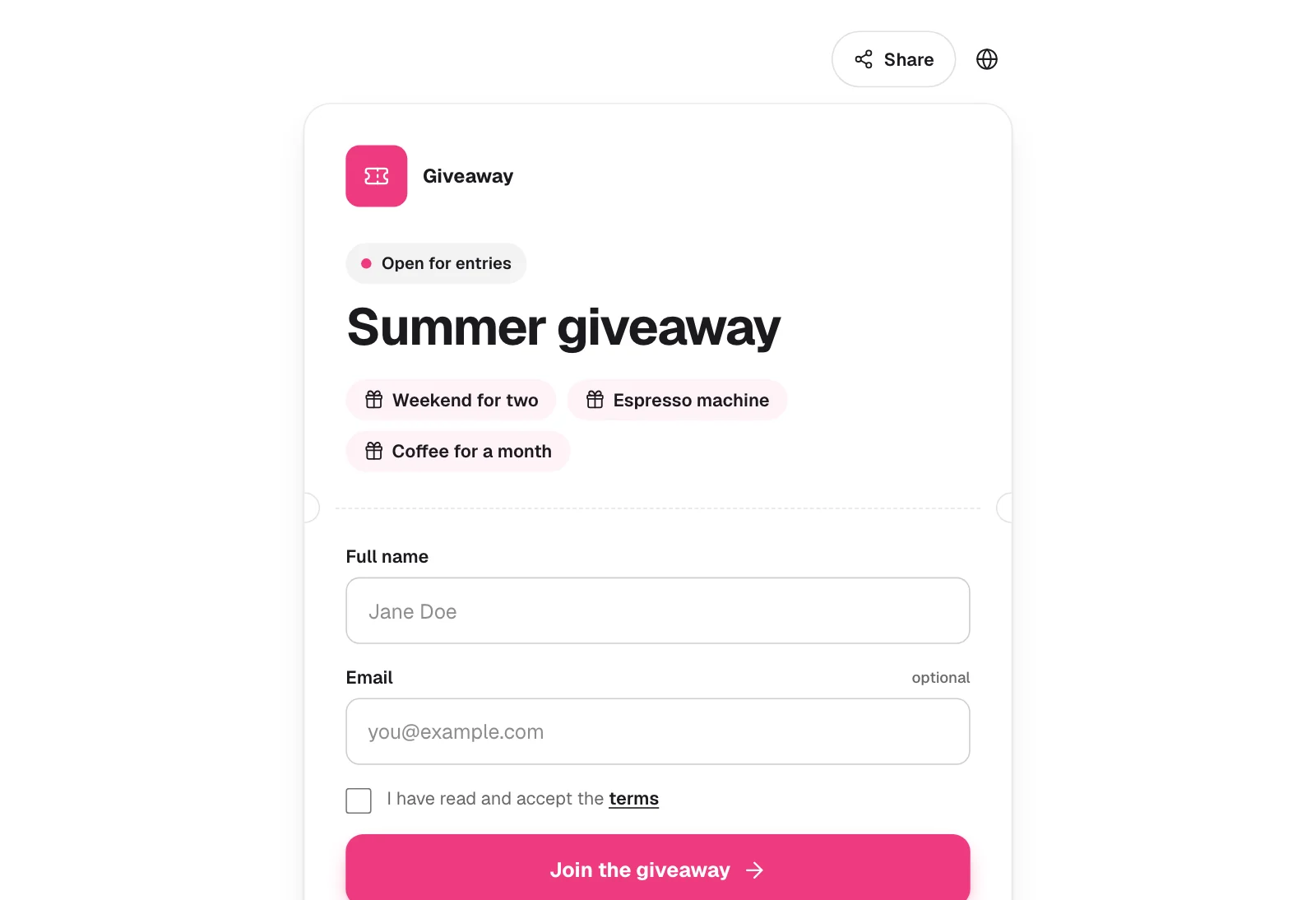
Collect only what the draw needs
Every extra field on an entry form is a liability. For a simple draw, a name or username is enough. An email address is only justified if you must contact entrants, and a postal address is only needed from the winner at delivery time.
Data protection laws such as the GDPR in Europe, the LGPD in Brazil and the KVKK in Turkey share the principle of data minimisation: ask for no more than you can justify. This is general information, not legal advice. Ask yourself for each field what you would lose if it disappeared; if the answer is nothing, remove it.
- Draw: name or social handle
- Contacting winners: email or the entered account
- Delivery: postal address and phone number, from winners only
- Anything else: only if you can explain why you need it
Tell people what you do with their data
A short privacy notice on the entry page or in the rules should state who is collecting the data, what for, how long you will keep it, who it may be shared with and how people can contact you to see or delete their information.
Write it in plain language and keep it near the entry button. Participants should not have to hunt for it, and a form with a clear note is more trustworthy than one without. A notice that is easy to find is also your best defence if a participant later asks what they agreed to.
Keep marketing consent separate
Entering a draw and agreeing to receive newsletters are two different things. Use an unticked, optional box for marketing, state what people will receive, and make sure a person who declines can still enter. Pre-ticked boxes and bundled consent are widely considered poor practice, and in some places they are not valid at all.
Do not add entrants to your mailing list just because they gave an email address to take part. If you share data with a sponsor or partner, say so before people enter. Their trust is worth more than a slightly longer mailing list.
Store, share and delete responsibly
Keep entry lists in a protected place instead of sending spreadsheets around by email or chat. When you import a CSV or Excel file into a draw tool, include only the columns the draw needs. Limit access to the people who need the list, and use strong, unique passwords on any account that holds it.
Decide a retention period and stick to it, for example deleting personal data after the prize has been delivered and any claim period has ended. Keep a minimal record of the draw result if you need proof of what happened.
Handle requests from participants
Privacy laws such as the GDPR give people rights over their data, including the right to ask what you hold and to request deletion. Decide in advance who answers such requests and how quickly, and put a contact address in your privacy notice so that people do not have to guess.
If someone asks to be removed after the draw, remove them from your marketing list and from any stored entry data you no longer need. If they have already won, explain what you must keep to complete delivery, and delete it once the prize has arrived. Keep a note of what you did.
Show results without exposing people
Public results build trust but do not need to expose everyone's identity. Winologic's public results page can show winners with names masked, for example the first letters of a name or username, next to their ticket numbers and the time of the draw. The random seed and the entry-list fingerprint are saved with each draw and stay in your dashboard, not on the public page.
If you extract usernames from public comments, remember that they are still personal data in many jurisdictions, so apply the same care to them. They can still be personal data, so give people a way to ask for removal from your results and lists.
Frequently asked questions
Do I need consent to put someone's name into a draw?
+
If people enter themselves, they take part knowingly, but you still need to tell them how their data is used. For comment-based giveaways, the public comments are the entry. Rules on this vary by country, so check local guidance.
Can I use giveaway emails for my newsletter?
+
Only if entrants have clearly agreed to receive it, ideally through a separate optional box. Adding every entrant to a mailing list without consent can breach privacy and anti-spam laws.
How long can I keep entry data?
+
Keep it only as long as you need it, which is usually until the prize is delivered and the claim period ends. State the period in your privacy notice and then delete the data.
Do I have to publish winners' full names?
+
No. You can show first names, handles or masked names. Say in your rules how winners will be announced so that nobody is surprised.
Related guides
All guidesA general overview of the legal questions to consider before a giveaway: chance vs purchase, eligibility, taxes, disclosure and data. Not legal advice.
Collect giveaway entries with a QR code and a mobile join page: what to ask for, where to show the code, and how a live counter keeps people engaged.
Plan a trade show booth giveaway that brings visitors to your stand, collects leads responsibly and ends with a fair, visible winner draw.