Random Name Pickers: How They Work and Which to Trust
Learn what a random name picker really does, how computers generate chance and the checks that show whether a picker is fair enough for a giveaway.
By the Winologic team · Updated: · How we write our guides
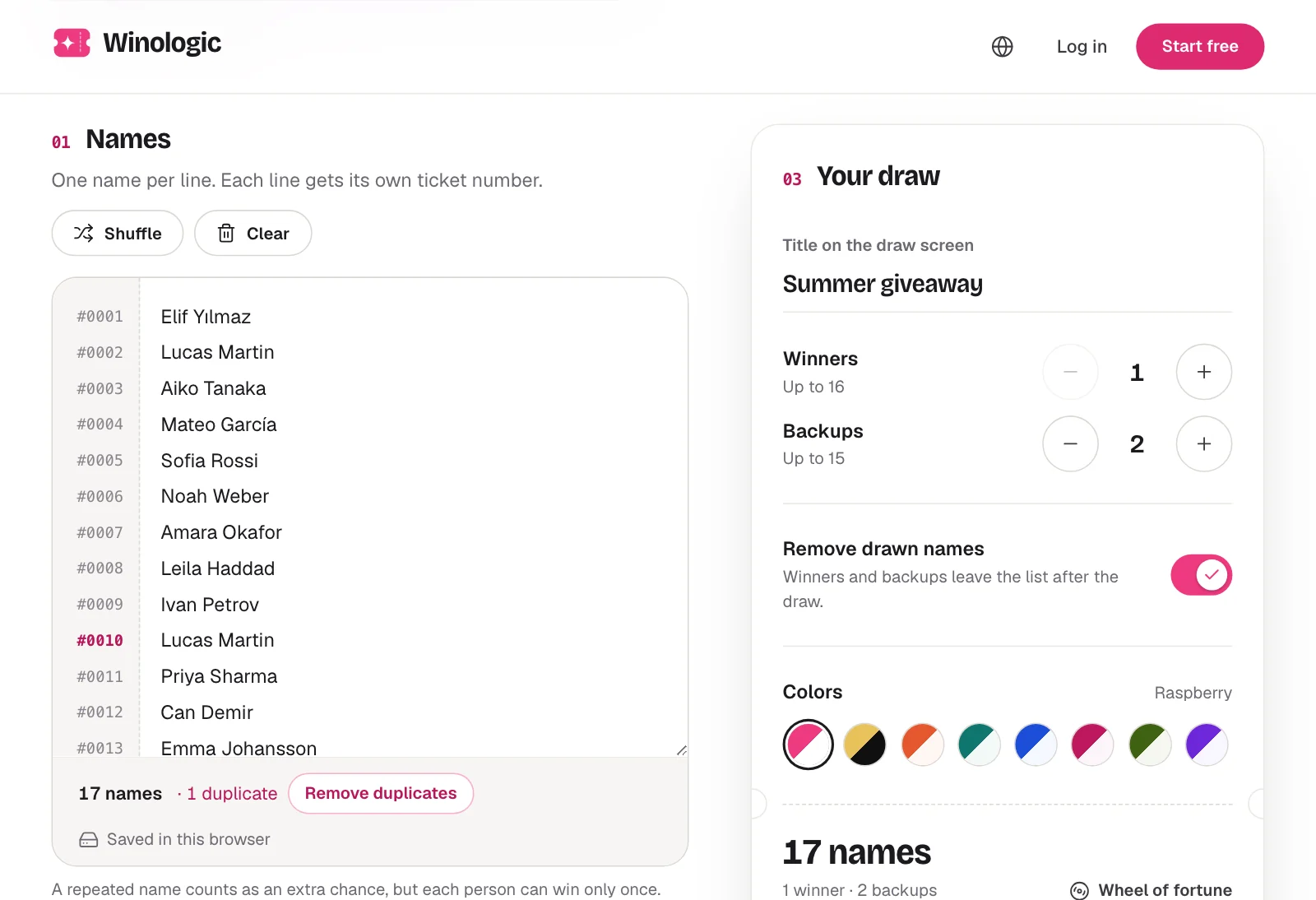
A random name picker takes a list and chooses entries with a random number generator, so each name has the same chance. A picker is trustworthy when it shows the list it used, gives the organiser no way to steer the outcome, removes drawn names from the pool and leaves a record that others can check afterwards.
What a random name picker really does
At its core a name picker does one thing: it takes a list and selects a position from it using random numbers. If there are 200 names and every position is equally likely, each person has a one in 200 chance on a single pick. Everything else, the wheel, the sound and the confetti, is presentation.
That distinction matters. A spinning wheel looks like physics, but on a screen the outcome is in most cases decided by code and the animation is built to land on it. A good picker is honest about this and focuses on how the choice is made, not on how dramatic the spin looks.
Where computer randomness comes from
Computers are predictable machines, so they usually create chance with a pseudo-random generator: a formula that turns a starting value, called a seed, into a long sequence of numbers that look random. With the same seed and the same formula you get the same sequence again, which is exactly what makes a draw reproducible.
Generators differ in quality. Simple ones are fine for casual games, while generators designed to be hard to predict suit cases where someone might try to game the result. For a giveaway, what matters is that the seed cannot be guessed before the draw and is recorded afterwards.
What makes a picker trustworthy
Trust comes from process, not marketing. A trustworthy picker lets you see and lock the entry list before drawing, gives each person the same chance unless you have declared extra tickets, and offers the organiser no hidden button for choosing a winner.
Check the practical details too: duplicates should be removed, participant data should be handled responsibly and the tool should run reliably on the device you will use on stage or on a stream. Finally, make sure the tool is simple enough for you to run confidently in front of an audience, because nerves cause more mistakes than software does.
Run a short test with dummy names the day before. You will learn how the draw looks, how long it takes and how winners are shown, and you will not be surprised on the day.
- The full entry list is visible before the draw.
- Every name has the same chance unless weighting is declared.
- Winners leave the pool so nobody is drawn twice by accident.
- The result can be saved, shared or re-checked later.
- There is no manual override or preset outcome.
Warning signs to watch for
Be careful with pickers that hide the list, let you preset a result, show nothing once the draw ends or ask for more personal data than a name. A picker that cannot explain how it chooses is entertainment, not a draw you can defend in public.
The human side is another weak spot: re-spinning because the first result was a friend, or quietly drawing again to skip someone. Decide the rules for a re-draw, such as an ineligible winner, before you start and stick to them.
Wheel, slot machine or shuffle: choosing a look
Because the look does not change the odds, choose the format that suits the room. A wheel is familiar and works well for a handful of names, a slot machine suits a quick one-winner reveal, and a name shuffle or elimination round builds suspense with a longer list.
Winologic offers seven draw screens: wheel of fortune, slot machine, card shuffle, name shuffle, elimination, countdown and scratch card. Whichever you pick, each draw is saved with its random seed and a fingerprint of the entry list, both kept in your dashboard, and a public results page shows who won, with ticket numbers and the time of the draw.
Frequently asked questions
Are online random name pickers really random?
+
Most use a computer random number generator, which is suitable for giveaways when it is seeded properly. You cannot judge the honesty of a tool from outside, so prefer one that shows the list, records the draw and gives you no way to choose the winner.
Is a wheel fairer than a simple list shuffle?
+
No. Fairness comes from the random selection and the list, not from the animation. A wheel simply feels more familiar to an audience.
Can a name picker be rigged?
+
Any tool that lets the operator set or influence the outcome can be rigged. A recorded seed, a fingerprint of the entry list and a public result make hidden changes much easier to spot.
Can I pick more than one name?
+
Yes. Good pickers let you draw several winners and remove each one from the pool so nobody is selected twice. Winologic lets you set several prizes, each with its own number of winners and backups.
Related guides
All guidesA non-technical guide to random draws: what randomness means, what a seed is, why reproducible results matter and how fingerprints protect the entry list.
Turn any list of names into a fair random draw: clean the list, remove duplicates, set winners and backups, and keep a record of the result.
See when a spin-the-wheel giveaway is the right format, when to choose another draw screen, and how to keep a wheel draw honest and easy to trust.