Spin-the-Wheel Giveaways: When a Prize Wheel Works Best
See when a spin-the-wheel giveaway is the right format, when to choose another draw screen, and how to keep a wheel draw honest and easy to trust.
By the Winologic team · Updated: · How we write our guides
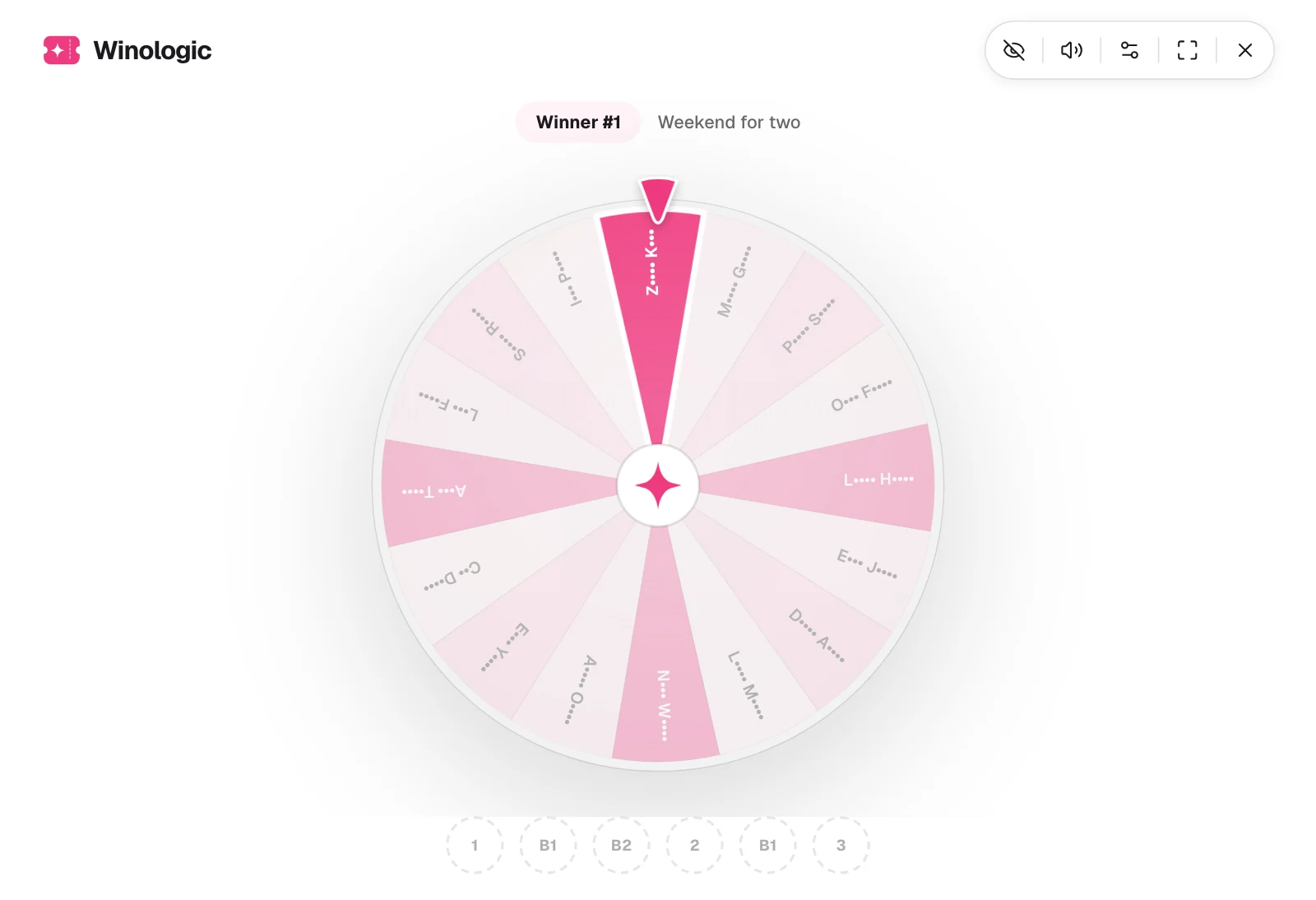
A spin-the-wheel giveaway works best when the audience is watching live, the list is short enough to read and you want a familiar moment of suspense. The wheel is only the presentation: fairness comes from a random choice made from a fixed entry list, with rules for re-spins and backup winners agreed before you start.
Why a wheel works so well on screen
Everyone already understands a wheel. There is no explanation needed, the pointer slows, the room goes quiet and the result lands in a way that feels earned. That built-in suspense is why wheels dominate live streams, shop openings and event stages.
A wheel also shows participants that the draw is happening in front of them. Seeing their own name on a segment makes people feel involved, which keeps them watching until the end of the reveal.
A wheel is also easy to photograph and record. A short clip of the pointer slowing down and landing on a winner is exactly the kind of content people share, which gives your giveaway extra reach after the draw is over.
Two different kinds of wheel
A wheel of names picks a person from your entry list: every segment is a participant and one spin selects a winner. A prize wheel works the other way round: each spinner lands on a prize, such as a sticker, a discount or a free drink, and every segment is a possible outcome.
The second type needs extra honesty. Segment sizes should match the real chances, and you should only put prizes on the wheel that you can actually hand over. If a grand prize is on the wheel, say how many are available and what happens once it is gone.
Whichever type you choose, tell the audience which one it is. A wheel of names that secretly weights some segments, or a prize wheel presented as a random draw of entrants, will leave people feeling misled when they find out.
When another draw screen is the better choice
A wheel stops being readable when the list is long. With hundreds of entries the names shrink to slivers and the wheel turns into decoration. For big lists, a slot machine, a name shuffle or an elimination round shows the pool more clearly and still builds tension.
Wheels are also slow when you need many winners. Ten sequential spins can drag on a stage, whereas a card shuffle or countdown reveals several results quickly. Match the screen to the number of winners and the time you have.
If you are unsure, test with your real list the day before and look at the screen from the back of the room. If you cannot read the names from there, switch to another screen.
Keeping a wheel draw fair
Make sure the result comes from a random selection rather than from how hard someone pushes. Show the list before the spin, remove each winner from the pool after the reveal and draw backups in the same session so you never need an awkward second round.
Agree your re-spin rule in advance. A re-spin is reasonable if the winner is ineligible or absent, and it is not reasonable because the first result was unpopular. Saying this out loud before the spin protects you from complaints.
- Show the entry list before spinning.
- Remove winners from the pool after each reveal.
- Draw backup winners in the same session.
- Announce the re-spin rule before the first spin.
Setting up a wheel in Winologic
Winologic includes a wheel of fortune screen alongside six other draw screens. Collect entries through the QR join page, manual entry, bulk paste or a CSV or Excel import, then apply your brand kit so the wheel appears in your own logo, colours and fonts.
Each draw records a random seed and a fingerprint of the entry pool, and a public results page can show the winners afterwards. If your list grows too large for a readable wheel, you can switch to another screen without changing the entries.
Frequently asked questions
How many names can a giveaway wheel hold?
+
Technically a lot, but readability drops quickly. Past a few dozen names the labels get tiny, so for large lists use a different draw screen such as a slot machine or name shuffle.
Is spinning a wheel actually random?
+
On a screen the winner is normally selected by a random number generator and the animation then lands on it. What counts is that the selection is random and the entry list is fixed, not how the wheel moves.
Can I re-spin if I do not like the result?
+
Only for reasons you agreed on in advance, such as an ineligible or absent winner. Re-spinning because the outcome is inconvenient damages trust and can invalidate the draw.
Can I use a wheel with weighted tickets?
+
Yes, as long as the extra tickets are declared in your rules. Winologic supports weighted tickets, so a participant with three tickets has three chances in the pool.
Related guides
All guidesLearn what a random name picker really does, how computers generate chance and the checks that show whether a picker is fair enough for a giveaway.
Run a prize draw people remember: choose the right draw screen, script the moment, show the entry count and handle absent winners on stage or on stream.
Plan a giveaway with several prizes: decide who can win what, set winners and backups per prize, choose the draw order and announce every result.