How Raffle Ticket Numbers Work and Why Sequential Numbers Build Trust
Raffle ticket numbers explained: how numbering works on paper and online, why sequential numbers build trust and how to handle lost or extra tickets.
By the Winologic team · Updated: · How we write our guides
A raffle ticket number is a unique, usually sequential label that links one chance to one participant. Because the numbers run in order from the first ticket to the last, anyone can see how many tickets exist and spot gaps or duplicates, which is why sequential numbering builds trust in both paper and online raffles.
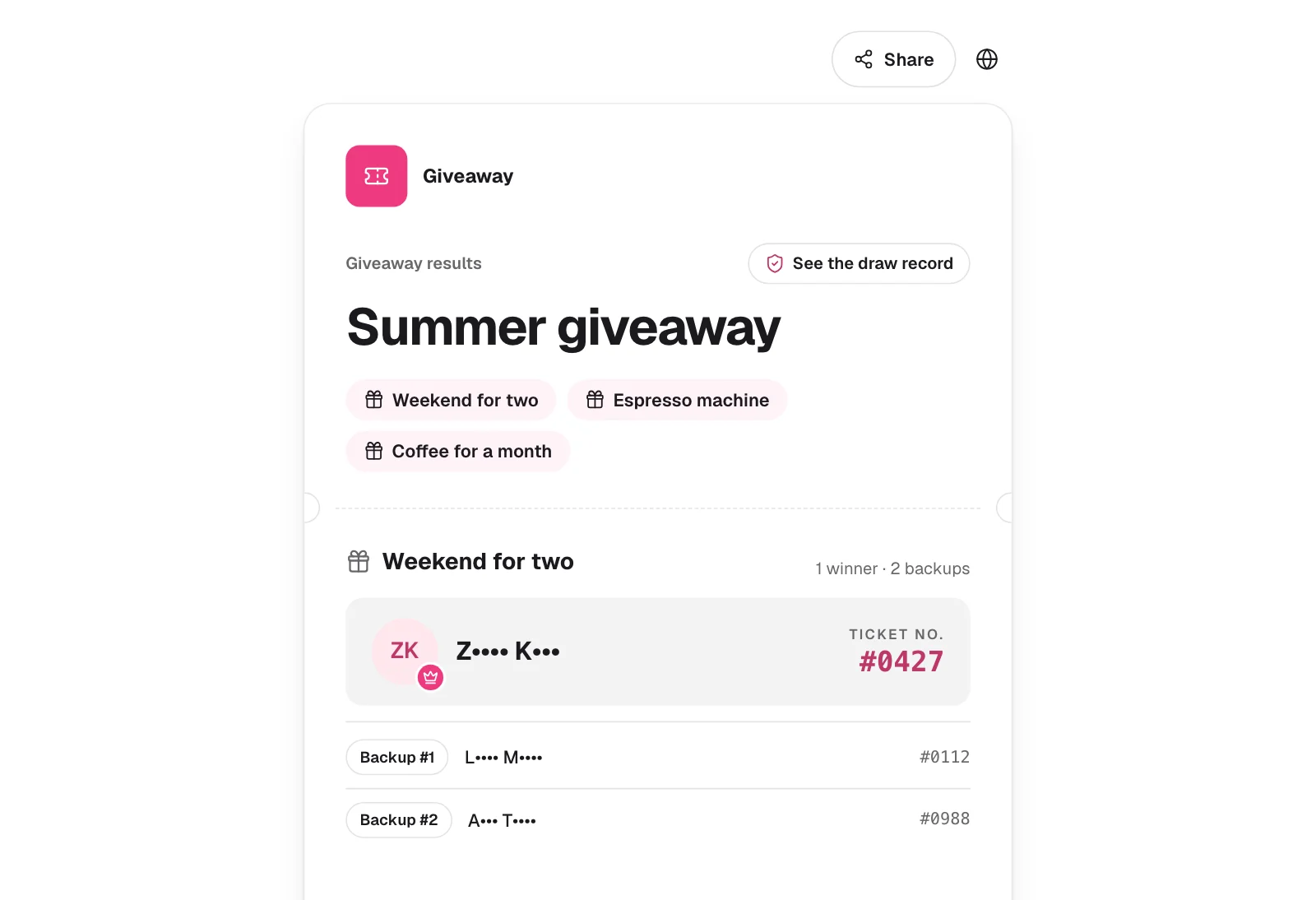
What a ticket number does
A ticket number ties a chance to a person. When someone buys or receives a ticket, that number goes onto a record next to their name or contact, and when the draw happens, the winning number identifies the winner. The system works for a school fair with fifty tickets and for a city event with thousands.
The idea is the same whether the ticket is a printed strip or a line in a digital list: one chance, one number, one record. That simplicity is what makes raffles easy to explain and easy to audit. It also makes the raffle easy to run with volunteers who have little experience.
Why sequential numbers build trust
When tickets are numbered 1, 2, 3 and so on, the last number tells everyone how many tickets were issued. Nobody can add a favoured ticket afterwards without the total changing, and a missing number stands out immediately. Anyone supervising the draw can check the arithmetic in seconds.
Random or unnumbered tickets are harder to check. Sequential numbering gives organisers, participants and any supervising person the same simple way to test that the pool is complete. Sequence is not a guarantee of honesty, but it removes the easiest ways to cheat and the easiest excuses for suspicion.
- The highest number equals the total count of tickets issued
- Gaps reveal lost, voided or withheld tickets
- Duplicates are obvious and can be fixed before the draw
- Participants can check their own number against the list
Paper tickets and digital tickets
Traditional raffle books have two matching parts: the buyer keeps one, and the stub with the same number stays with the organiser. At the draw, a number is called and the buyer compares it with the part they hold. Both systems work when the numbers are issued in order and recorded.
In a digital raffle, numbers are assigned automatically. Winologic gives each entry a sequential ticket number, and entries can be weighted so that one person holds several tickets when the rules allow it, for example one extra ticket per bonus action.
Handling lost, extra and voided tickets
Things go wrong in real raffles, so decide the rules before selling anything. If a ticket is lost, the buyer should be able to prove their purchase through your sales record. If a number is voided, mark it as voided instead of reusing it.
Keep a simple register of who holds each number, and never reissue a number that has been used. If your raffle raises money for a cause, local rules may also require records of tickets sold, so check them. Make the register available to whoever supervises the draw.
Weighted tickets and fairness
Some organisers give extra tickets for extra actions or purchases. This is called weighting. It is fair when it is stated clearly in the rules before entries open, and when every participant can see how many tickets they hold. If tickets are sold, local raffle rules may also apply.
In a weighted draw, a person with five tickets has five chances in the pool, each with its own number. That keeps the logic of the raffle intact: one ticket, one chance. The risk is complexity, so keep the weights simple and explain them with an example, such as one extra ticket for each friend who joins.
Publish the numbers after the draw
After the draw, share the total number of tickets issued and the winning number or numbers. If names are sensitive, publish only the numbers and let winners come forward. This is easier to do digitally than on paper, and it helps people who bought tickets but missed the event.
A public results page that lists the winning ticket, with names masked if needed, lets participants confirm the outcome without asking you. It also answers the most common question after any raffle: was the draw done properly, and who holds the number?
Frequently asked questions
Should raffle ticket numbers start at 1?
+
Starting at 1 is the clearest, because the last number then equals the total of tickets issued. Some organisers start at a higher number for appearance, but then the total has to be stated separately.
Can one person hold several tickets?
+
Yes, in most raffles one person may buy or receive several tickets, each with its own number. Say in your rules whether there is a limit, since it affects fairness.
What if two tickets have the same number?
+
Resolve it before the draw. Check the register to see which ticket was issued correctly, reissue the other under a new number and note the correction.
Are digital ticket numbers different?
+
They work the same way, but a system assigns them automatically, which removes human error. The entry list with its numbers is then saved with the draw, so questions afterwards can be answered from the record.
Related guides
All guidesHow weighted entries and bonus tickets change the odds in a giveaway, how to calculate chances, and when extra tickets are fair to every participant.
Plan a live raffle for an event: show a QR code on screen, collect entries from the crowd, close on time and draw winners on stage with backups ready.
How to organise a school or charity raffle: check local rules, number every ticket, run a transparent draw and report the results to your supporters.