School and Charity Raffles: Organise a Transparent Draw
How to organise a school or charity raffle: check local rules, number every ticket, run a transparent draw and report the results to your supporters.
By the Winologic team · Updated: · How we write our guides
A school or charity raffle works best when the purpose, ticket price, prizes and draw date are written down before sales start, every ticket has a unique sequential number, and the draw is random and public. Raffle and lottery rules differ widely by country and region, so confirm what your local authority requires before selling any tickets.
Check the local rules before anything else
A raffle that sells tickets for a chance to win is often regulated differently from a free giveaway. Some places require a licence or registration, cap the prize value or the share of income that can go to costs, and restrict who may sell or buy tickets, especially minors. Rules differ by country and sometimes by city, so ask your local gaming or charity authority.
Schools should also check with the head teacher or school board, and charities with their trustees or governing body. Write down what you were told and keep it with your records. This page is general information, not legal advice; it simply helps you ask the right people early.
Plan the purpose, prizes and money
Tell supporters exactly what the money is for, whether that is new library books, a charity appeal or a class trip. A clear purpose lifts ticket sales and answers awkward questions before they are asked. Decide the ticket price, the maximum number of tickets, the closing date and how many prizes there will be.
Ask local businesses and parents to donate prizes so that nearly all ticket income goes to the cause. Record every donation and expense in a simple sheet, because supporters will want to know how much was raised and how it was spent.
- Write the ticket price, draw date and prize list on every poster.
- Name who is allowed to sell tickets and where the money is kept.
- Decide in advance how unsold or returned tickets are handled.
Number tickets and keep clean records
Give every ticket a unique, sequential number and keep a matching list of who holds which numbers. When each number belongs to exactly one buyer, nobody can argue about who is in the draw, and gaps in the sequence reveal missing tickets immediately. A family that buys five tickets holds five numbers, not one name written five times.
Paper stubs suit face-to-face sales. For online or QR-based sales, a join page can assign numbers as people sign up. Winologic assigns sequential entry ticket numbers and can import a CSV or Excel sheet if someone has already typed up a paper sales list.
Run the draw in the open
Hold the draw where supporters can watch, such as a school fair, an assembly or a livestream. State how many tickets are in the pool before you start, draw the top prize first, and remove each winner from the pool so nobody wins twice. A big screen with a wheel or card animation keeps children and parents engaged.
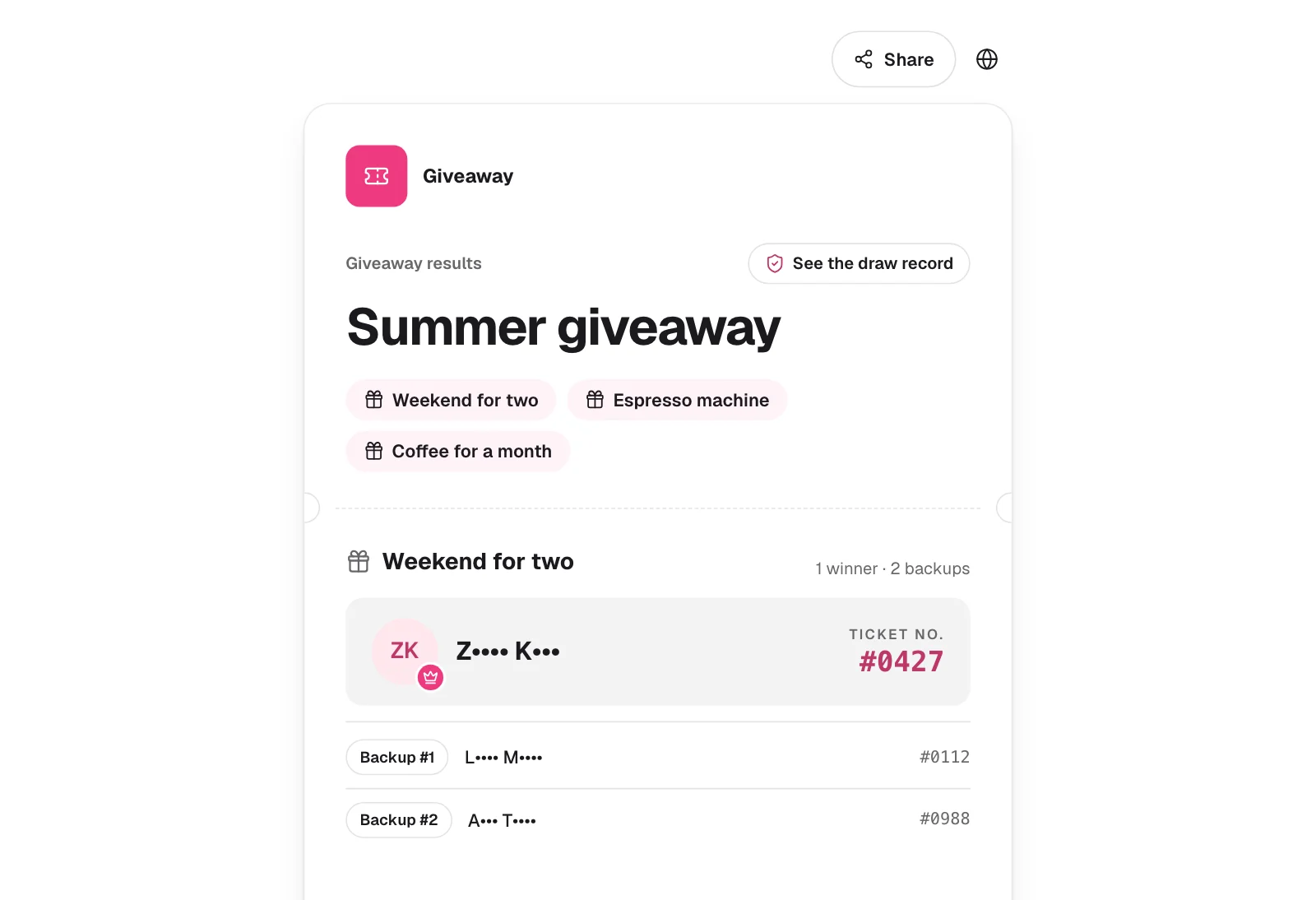
Draw backup winners for every prize. Ticket holders are not always present, and a prepared backup list lets you move on immediately instead of leaving a prize unclaimed or redrawing from scratch. If a winner is a child, arrange pick-up through a parent or teacher, and consider masking surnames when you publish the results.
Report back and say thank you
Publish the winning ticket numbers, thank your sponsors and share the total raised. Many raffles lose repeat supporters by going quiet afterwards. A public results page, where names can be masked to protect children's privacy, is easy to link from a newsletter or parent group.
Contact winners through the school office or the charity's official account rather than personal phones, and set a deadline for collecting prizes. Keep the final ticket list and the draw record for as long as your local rules or internal policies require.
Keep it safe, simple and inclusive
Cash handling is the part of a raffle that most often goes wrong. Use two people to count money, keep ticket books locked away and bank the proceeds quickly. Tell volunteers they must never sell a ticket without writing the buyer's name and contact details against its number.
Make the raffle easy for everyone to join. Offer card or online options where possible, display prizes at the event, and give families a clear way to ask questions. A friendly, well-organised raffle raises more money and tends to be remembered for the right reasons.
Frequently asked questions
Do we need a licence to run a school or charity raffle?
+
It depends on where you are. Some countries and regions require a licence or registration for any raffle that sells tickets, while others exempt small fundraisers, so check with your local authority before selling tickets.
Can children buy raffle tickets?
+
Local rules vary, and some places set minimum ages for buying or selling tickets. Check the rules for your area and your school's own policy, and keep children's names off public results where possible.
How do we prove the draw was fair?
+
Number the tickets, show the size of the pool, draw in front of supporters and publish the winning numbers. A tool that saves each draw with its random seed and a fingerprint of the entry list also gives you a record to fall back on if anyone asks.
What if the winning ticket holder is not present?
+
Announce a short claim deadline and move to the backup winner if nobody responds. Drawing backups at the same time as the main prize saves you from a second draw.
Related guides
All guidesRaffle ticket numbers explained: how numbering works on paper and online, why sequential numbers build trust and how to handle lost or extra tickets.
A general overview of the legal questions to consider before a giveaway: chance vs purchase, eligibility, taxes, disclosure and data. Not legal advice.
Plan a live raffle for an event: show a QR code on screen, collect entries from the crowd, close on time and draw winners on stage with backups ready.